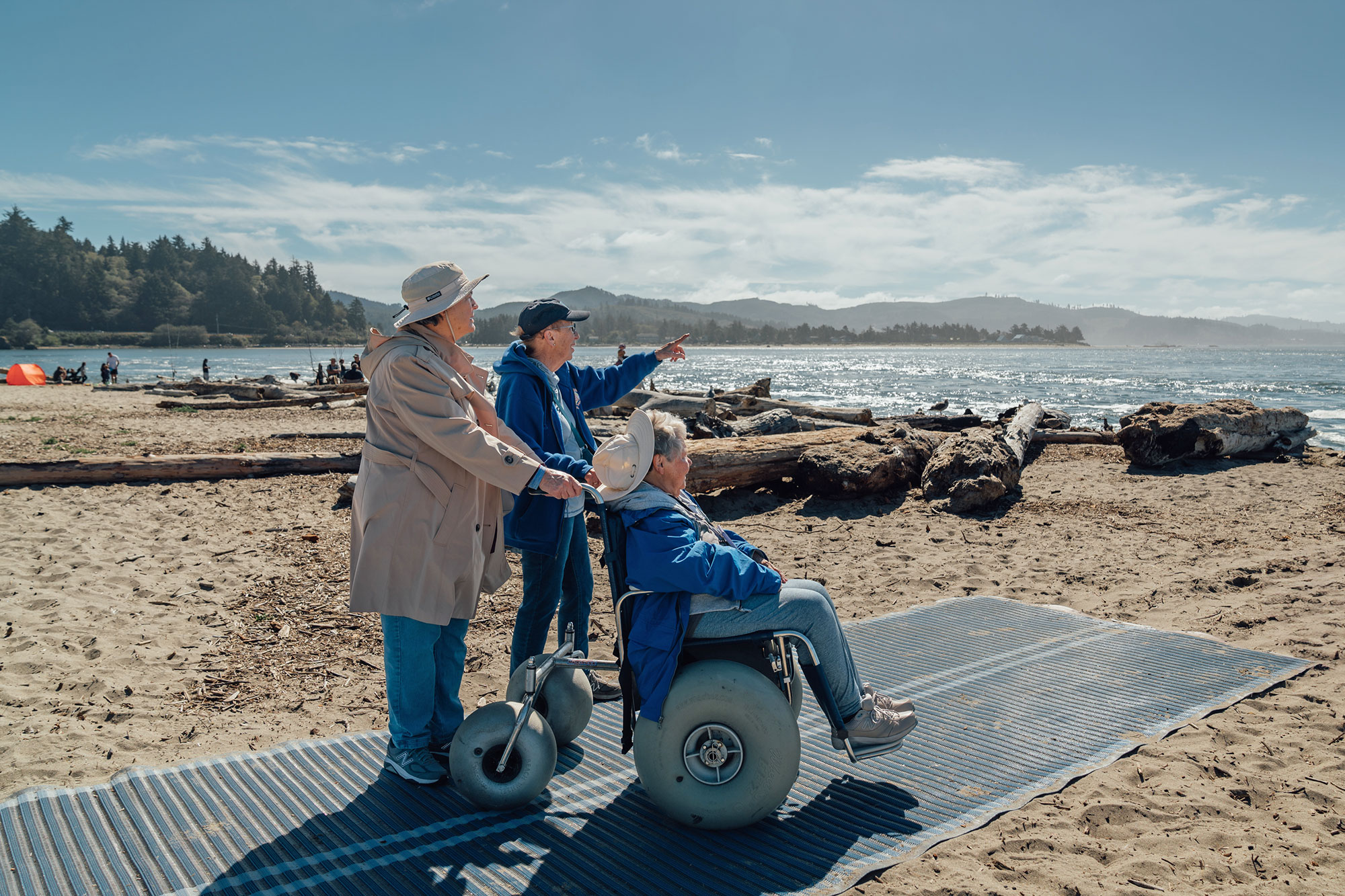
Mobi-mats have been changing the way everyone visits the beach. These mobile pathways make it possible not only for people with disabilities, but also for elders, families with strollers, and anyone navigating mobility challenges to safely and easily experience places they otherwise wouldn’t.
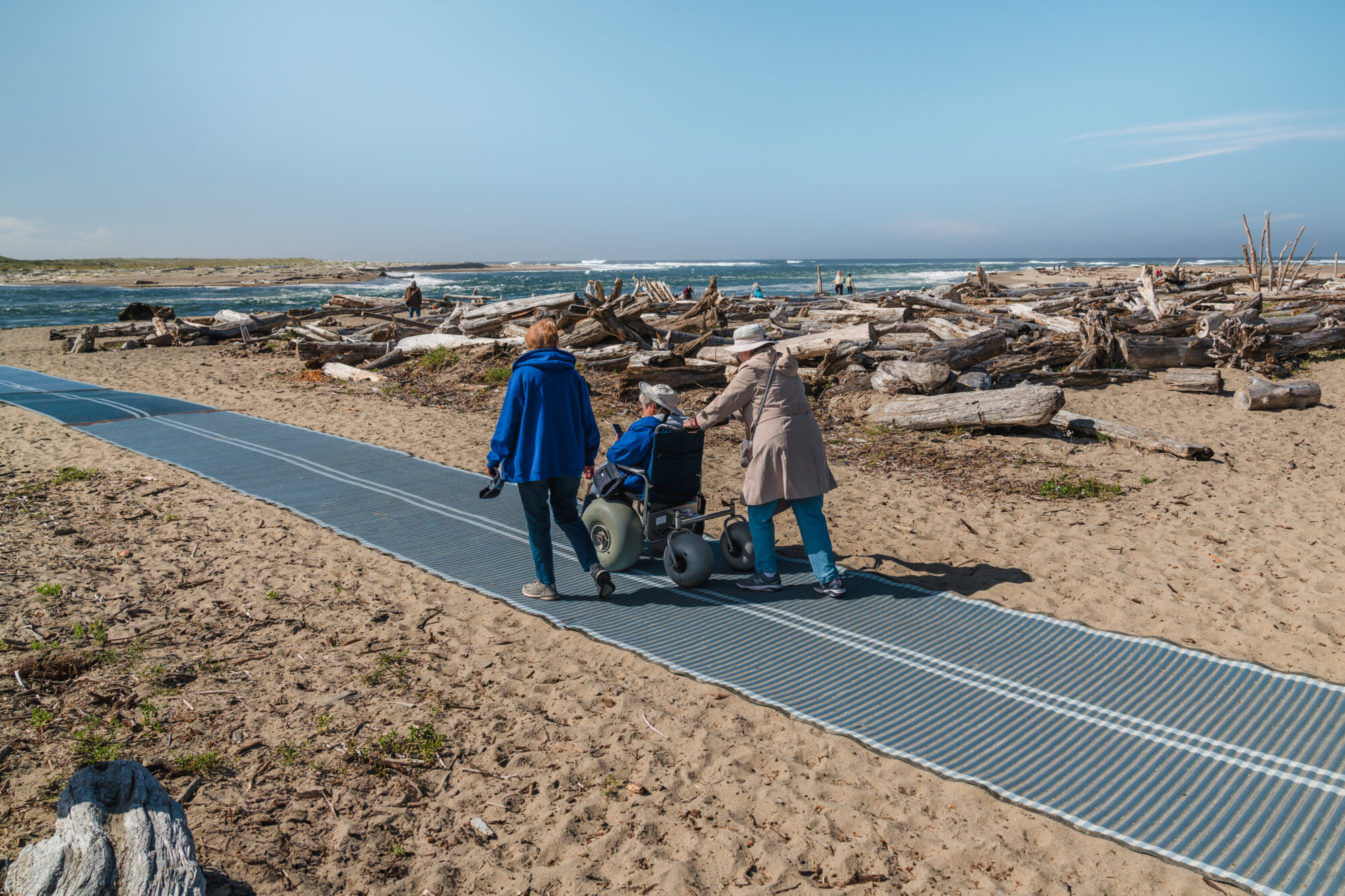
What started as a coastal phenomenon is now spreading, because the use case for these versatile mats is undeniable. Parks. Farms. Events. Mobi-mats can bring accessibility to almost any uneven surface.
The case studies are in: these mats are an incredible investment for any business or community. The flood of joy and celebration from communities who have rolled out Mobi-mats is contagious, and the value they bring to the quality of life for visitors and locals alike makes them one of the best investments we can make in our region.
As part of our broader commitment to accessible travel in Oregon, the Oregon Coast Visitors Association is pleased to share a statewide toolkit: Bringing Mobi-Mats to Your Community: A Step-by-Step Guide. This guide is a one-stop resource for understanding what Mobi-mats are, their best-use cases, and how to fund, permit, install, maintain, and market your mats to help elevate your business or destination.
Mobi-mat Toolkit Background
In 2024, the Oregon Coast Visitors Association published the first edition of Bringing Mobi-Mats to Your Community: A Step-by-Step Guide. At the same time, we announced funding opportunities for coastal organizations to purchase and implement their own Mobi-mat programs.
Since the launch of the toolkit and the initial disbursement of funds, four new Mobi-mats have been deployed along the Oregon Coast — in Cannon Beach, Heceta Head, Gold Beach, and Waldport — adding to the eleven existing Mobi-mat locations on the coast.
While the Oregon Coast has helped pioneer beach accessibility through Mobi-mats, Oregon is also emerging as a national leader in accessible travel. In 2026, Oregon became the first Destination Verified State through Wheel the World — a milestone that reflects a broader, statewide commitment to making travel more accessible to all.
At the close of the 2025–2026 season, we gathered success stories and user feedback from communities that have successfully implemented Mobi-mats. Their insights informed this updated edition, including expanded installation guidance, practical maintenance tips, and additional real-world use cases.
The intent of this newly updated 2026 toolkit is to inspire and equip partners across Oregon to implement Mobi-mats in parks, at events, on farms, and in other community spaces — expanding accessibility for residents and visitors alike.
Amended Toolkit Highlights
- A brand-new case study featuring Oregon’s first agritourism Mobi-mat use case at Kiyokawa Family Orchards in Mount Hood
- Learnings from both the mountains and the beach, including new insights into installation, maintenance, and long-term management
- Guidance on funding, obtaining permits, selecting a location, and working with the Mobi-mat sales team to choose the right mats for your site
- A new way to market and fund your mats: purchasing “ad connector” mats to recognize sponsors
2025 was a milestone year for the coast. Together, we made meaningful advances in advancing accessibility initiatives and creating a more inclusive experience for both visitors and local residents. Through expanded Mobi-mat programs, beach wheelchair access, Oregon’s Wheel the World designation, and quarterly TravelAbility partner meetings, communities across the state are showing up — and stepping up — to create a better travel and lived experience for all.
Moving into 2026, we hope Destination Management Organizations, parks, businesses, and community organizations will learn from these case studies and implement their own Mobi-mat initiatives as we continue to expand access across Oregon.